
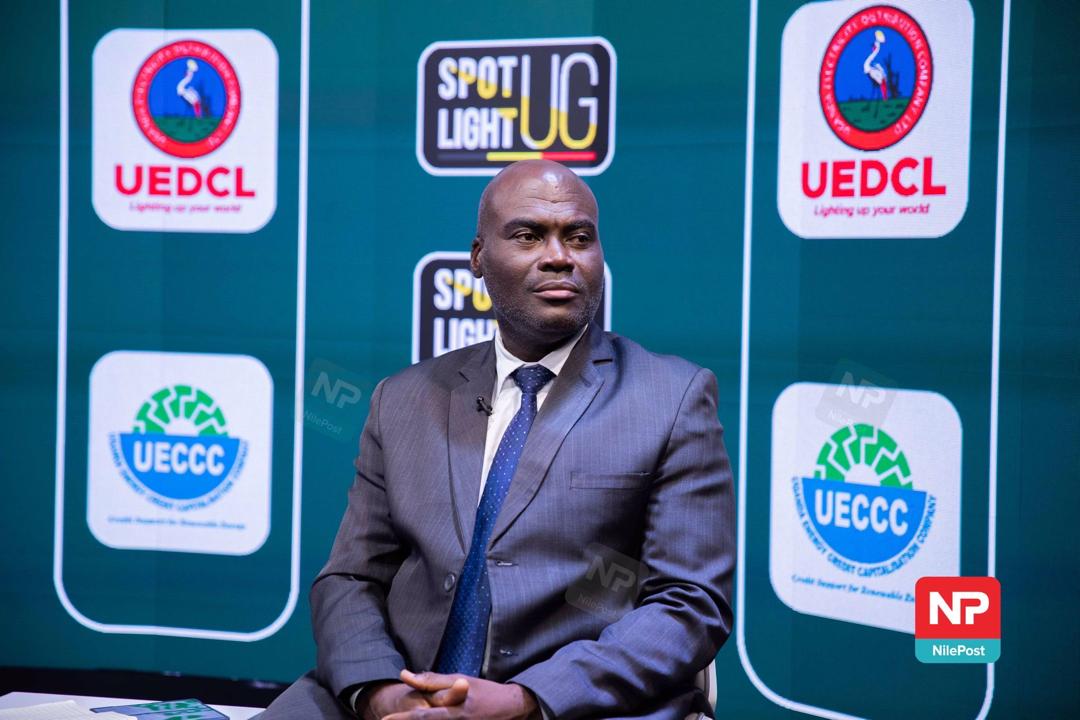
The Managing Director of Uganda Electricity Distribution Company Limited (UEDCL), Mwesigwa Paul, has reaffirmed the company’s commitment to ensuring affordable, reliable, and sustainable electricity access across Uganda, as part of the country’s broader effort to power inclusive economic growth.
Speaking during Spotlight Uganda hosted by NBS Television on Monday under the theme “Powering Uganda’s Growth: Access, Reliability, and Expansion”, Mwesigwa highlighted UEDCL’s ongoing investments in strengthening the national power distribution network and improving service delivery to customers across the country.
“The journey is moving on steadily and well. The first major benefit Ugandans have realised is access to low-cost energy,” Mwesigwa said.
“In just six months, we have seen a notable shift in power demand. However, challenges have emerged due to a lack of historical maintenance, leading to transformer failures an issue we are actively fixing.”
Mwesigwa emphasised that UEDCL is prioritising network rehabilitation and maintenance to curb power fluctuations and eliminate load shedding.
“If you don’t invest in maintenance of the power network on time, you will experience power fluctuations — and that’s what causes load shedding. We are fixing this by increasing investment in network infrastructure,” he said.
According to Mwesigwa, the company has embarked on several major infrastructure projects, including plans to construct two new substations on Nakasero Hill and another in Njeru, Jinja, aimed at stabilizing power supply in industrial and urban centers. UEDCL has also divided the country into 15 operational territories, each assigned to a contractor to expedite transformer injections and network upgrades.
UEDCL continues to roll out prepaid electricity connections nationwide, with postpaid service now primarily reserved for factories and large industries.
“All new connections are prepaid, including those for government offices. We’ve made the application process simple — you can apply for a new connection through your phone or a verified wireman. The connection fee for domestic users is Shs 30,000, and no one should charge more,” Mwesigwa said.
He also pointed out that UEDCL’s workforce is performance-driven, with teams paid based on output such as new connections, and assessed regularly to maintain accountability.
Furthermore, he argued that field teams operate 24/7 to respond to power outages, especially at substations, ensuring rapid restoration of service.
“Our teams are always on the ground conducting sweeps for illegal connections, while also using that opportunity to connect anyone who self-reports.”
Mwesigwa reaffirmed that UEDCL sees renewable energy sources — particularly solar — as complementary rather than competitive.
“We are not competitors with solar. Because of this energy mix, we complement each other,” he said.
Mwesigwa also urged Ugandans to be more vigilant about electrical safety, warning against building too close to power lines.
“Our population is not very keen on safety matters, and we have seen many people constructing dangerously close to electricity lines. We are intensifying public education to prevent accidents,” he said.
Reflecting on lessons from the past, Mwesigwa emphasized the importance of financial prudence for sustainability.
“What made government companies fail back in the day was the inability to generate revenue. We are very steady and serious about maintaining financial discipline and operational efficiency,” he said.
As Uganda continues to expand access to electricity, UEDCL remains a key player in ensuring that every home, business, and institution benefits from affordable, reliable, and sustainable energy — a cornerstone for national development and industrialization.
